


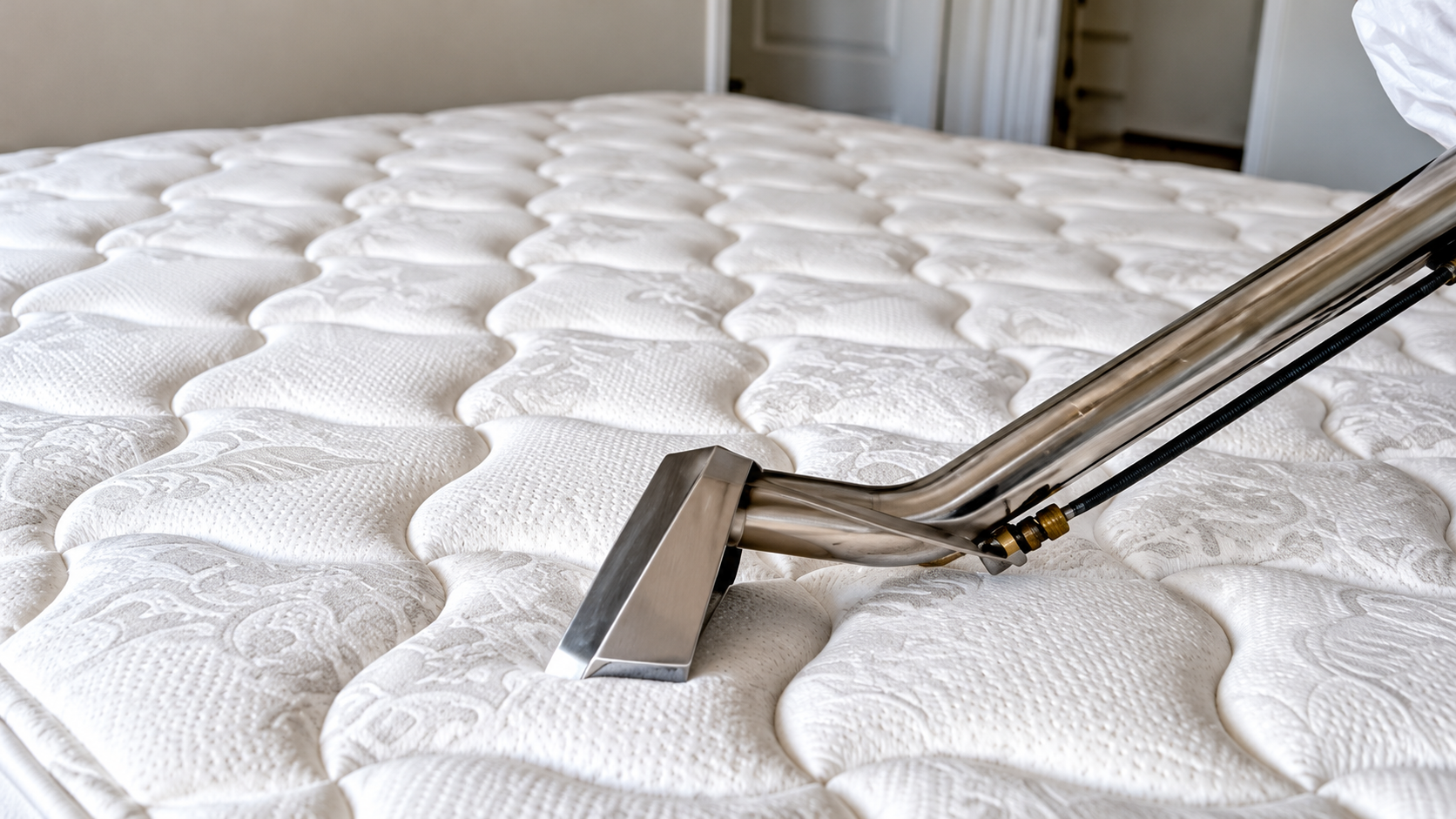
Mattress cleaning Gold Coast services may be worth considering when stubborn stains, persistent odours or accumulated dirt remain despite regular household cleaning.
Sweat, body oils, dust and accidental spills can gradually affect mattress materials. Changing bedding and vacuuming help with routine maintenance, but they may not remove contamination that has penetrated fabric or cushioning.
Not every mattress needs professional treatment. Some problems can be managed at home, while persistent dampness, suspected mould or deeply embedded contamination may require specialist assessment or replacement.
This guide explains seven signs your mattress may need professional attention, how cleaning works and what to consider before booking a service on the Gold Coast.
How Often Do Mattresses Need Professional Cleaning?
There is no fixed professional cleaning schedule that suits every mattress.
The appropriate timing depends on how the mattress is used, its construction, exposure to spills or moisture and the manufacturer’s care instructions.
Some mattresses may need attention after an accident or when persistent staining develops. Others may remain in suitable condition with regular household maintenance.
Factors that influence cleaning needs include:
- Daily use: Perspiration, body oils, skin particles and dust can accumulate through regular use.
- Children and pets: Accidental spills, pet hair and soiling may increase cleaning needs.
- Moisture exposure: Spills, condensation and humidity can create additional concerns.
- Accommodation turnover: Mattresses in guest properties may need condition checks between bookings.
- Mattress construction: Foam, latex, hybrid and innerspring mattresses can have different cleaning restrictions.
- Manufacturer instructions: Care guidance should determine which methods are suitable.
Rather than booking automatically at set intervals, monitor the mattress’s condition and arrange professional advice when routine maintenance is no longer effective.
A technician can assess whether cleaning is suitable or whether the mattress needs a different approach.
7 Signs It’s Time to Book Mattress Cleaning
Some mattress problems develop gradually, while spills and accidents may require attention sooner.
The following warning signs can help you decide when professional cleaning is worth considering.
1. Visible Stains Are Becoming Harder to Remove
Sweat, body oils, drinks and accidental spills can leave marks that gradually discolour mattress surfaces.
Fresh stains may respond to manufacturer-approved spot cleaning. Older stains can be harder to remove, particularly when liquid has penetrated the fabric or cushioning.
Common warning signs include:
- Yellow or brown discolouration.
- Marks around frequently used sleeping areas.
- Spills that remain visible after spot cleaning.
- Repeated staining in the same area.
If suitable household cleaning no longer improves the appearance, a professional assessment can help establish whether stain treatment is appropriate.
Big Red Gold Coast offers targeted mattress stain treatment for sweat, urine and other personal stains using specialised cleaning solutions and extraction equipment.
Results depend on the mattress material, stain type, age of the stain and previous cleaning attempts. Complete stain removal cannot be guaranteed.
2. Your Mattress Has an Unpleasant Odour
Mattress fabrics and cushioning can absorb perspiration, body oils, accidental spills and other substances that contribute to unpleasant smells.
A persistent odour after changing bedding and airing the bedroom may indicate that the mattress itself needs attention.
Professional cleaning may help reduce smells associated with removable contamination.
However, a musty smell accompanied by dampness or visible mould is a different concern. It may indicate a moisture problem that requires further investigation.
In some cases, particularly where contamination has affected internal materials, replacement may be more appropriate than cleaning.
3. Dust and Debris Continue to Accumulate
Mattresses collect dust, skin particles and other debris through normal use.
Vacuuming with a suitable upholstery attachment can remove some surface dirt, but particles may remain around seams, stitching and fabric layers.
Check the manufacturer’s care instructions before vacuuming, especially where the mattress has delicate fabric or a specialised cover.
If the mattress remains visibly soiled despite suitable maintenance, professional cleaning may help address accumulated dirt.
Cleaning should complement regular bedding care rather than replace it.
4. Your Mattress Has Been Affected by Urine or Other Accidents
Children, pets and everyday household accidents can expose mattresses to urine, drinks and other liquids.
Because mattresses contain absorbent materials, moisture may penetrate beyond the outer fabric.
Act promptly after a spill. Blot excess liquid without rubbing or saturating the mattress, and follow the manufacturer’s cleaning instructions.
Professional treatment may be worth considering when:
- Stains remain after suitable spot cleaning.
- An unpleasant odour develops.
- Liquid has penetrated beyond the surface.
- The affected area repeatedly becomes noticeable.
A technician can assess whether targeted stain and odour treatment is suitable.
If contamination has reached deep internal layers, cleaning may not resolve the problem completely. Replacement may be necessary in some circumstances.
5. You Are Concerned About Dust Mites and Allergens
Dust mites are commonly found in bedding and soft furnishings. Their allergens can contribute to symptoms in people who are sensitive to them.
Accumulated dust may be one reason to review your mattress cleaning routine, but professional cleaning is only one part of managing allergen exposure.
Australia’s healthdirect recommends measures such as regular bedding washing, protective mattress covers and household dust management.
Professional mattress cleaning may remove accumulated dust and some allergens, but it cannot guarantee complete dust mite elimination or prevent future exposure.
For more practical steps, see the dedicated dust mite section below.
People experiencing persistent allergy or asthma symptoms should seek appropriate medical advice.
6. The Mattress Has Been Exposed to Moisture
Spills, leaks and humid conditions can leave mattress materials damp.
Persistent moisture is concerning because absorbent internal layers may be difficult to inspect and dry thoroughly.
Warning signs include:
- Damp patches that do not dry.
- Persistent musty smells.
- Visible mould-like spotting.
- Moisture exposure following a leak or flooding.
If mould is suspected, stop using the affected mattress until it has been appropriately assessed.
The Australian Centre for Disease Control advises that mould-contaminated mattresses may require professional cleaning or replacement, depending on the circumstances.
The moisture source must also be addressed to reduce the risk of recurrence.
Do not assume that visible surface cleaning makes a deeply damp or mould-affected mattress suitable for use.
7. The Mattress Has Not Been Assessed or Cleaned for Several Years
A mattress can accumulate dirt through regular use even when the surface appears reasonably clean.
If it has not been assessed for several years, review its condition rather than automatically booking treatment.
Look for persistent stains, odours, heavy soiling, moisture concerns and deterioration.
The mattress’s age, construction and manufacturer’s instructions should also influence the decision.
Professional cleaning may be worthwhile for a mattress in suitable condition. However, structural damage, severe deterioration or deep contamination may make replacement a better option.
When Should You Book Mattress Cleaning?
The type and severity of the problem are more useful guides than the amount of time since the mattress was last cleaned.
Use the following table to decide whether routine care, professional cleaning or specialist assessment may be appropriate.
| Mattress condition | Recommended first step | When professional help may be needed |
| Light surface dust | Vacuum using a suitable attachment | Usually unnecessary |
| Minor fresh spill | Follow manufacturer-approved spot-cleaning instructions | If staining or odour remains |
| Visible sweat or body oil stains | Assess the stain and mattress material | If suitable home cleaning does not help |
| Persistent odours | Identify the source and check for moisture | If the contamination is suitable for cleaning |
| Urine or pet accidents | Act promptly and assess liquid penetration | Targeted treatment may be appropriate |
| Suspected mould or persistent dampness | Stop use and investigate the moisture problem | Specialist assessment or replacement may be required |
| Heavy soiling in accommodation | Inspect the mattress and check care instructions | If professional treatment is compatible with its condition |
Professional cleaning can address certain types of removable contamination, but it cannot repair structural deterioration or guarantee removal of substances that have penetrated deeply into mattress materials.
If the mattress is damp, visibly mould-affected or damaged, seek appropriate advice before arranging ordinary cleaning.
How Does Professional Mattress Cleaning Work?
Professional mattress cleaning aims to remove suitable surface and embedded contamination using methods appropriate for the mattress material.
The process varies according to construction, fabric compatibility, staining and moisture condition.
Big Red Gold Coast’s published mattress cleaning service describes hot-water extraction, stain treatment, dust mite treatment and odour management. The business also lists cleaning services for daybeds and futons.
A mattress cleaning appointment may involve five stages.
1. Inspecting the Mattress
The technician examines the mattress’s visible condition, including stains, fabric type and potential cleaning restrictions.
Manufacturer care instructions and the mattress’s construction help determine whether professional treatment is suitable.
2. Identifying Stains and Odours
Different contaminants require different cleaning approaches.
Sweat, body oils, urine and food spills may respond differently depending on their age, the materials affected and previous cleaning attempts.
Identifying the likely source helps establish realistic treatment expectations.
3. Preparing the Surface
Loose dust and debris may be removed before cleaning products are applied.
This can include attention to seams, stitching and other areas where particles accumulate.
The preparation method should suit the mattress fabric and its care requirements.
4. Applying Suitable Cleaning Treatments
Where permitted by the manufacturer’s instructions, specialised cleaning solutions may be used to address staining and embedded dirt.
Big Red Gold Coast describes using professional extraction equipment for mattress cleaning and stain removal.
However, not every mattress is suitable for hot-water extraction or other moisture-based treatments.
Foam, latex and some hybrid constructions may have restrictions that require alternative methods or prevent particular treatments.
5. Extraction and Drying
Where extraction is suitable, equipment removes loosened dirt and cleaning solution from the treated material.
The mattress must dry adequately before it is used again.
Drying time depends on the mattress construction, treatment method, moisture level, humidity and ventilation.
Ask the technician when the mattress can safely be used, and follow all drying instructions before replacing bedding.
Which Mattress Types Can Be Professionally Cleaned?
Mattress construction plays an important role in determining whether professional cleaning is appropriate.
A method suitable for one mattress may damage another, especially when excessive moisture or heat is involved.
Innerspring Mattresses
Innerspring mattresses generally contain metal support components and cushioning materials.
The outer fabric and internal layers influence which cleaning methods are suitable.
Excessive moisture should be avoided because internal materials may be difficult to dry.
Memory Foam Mattresses
Memory foam can retain moisture and may be sensitive to excessive wetting.
Some manufacturers restrict wet cleaning or recommend particular surface-cleaning methods.
Before booking, check the care label and confirm whether the proposed treatment is compatible with the mattress construction.
Latex Mattresses
Latex mattresses may contain natural or synthetic latex and additional comfort layers.
Cleaning instructions differ between manufacturers.
Unsuitable chemicals, excessive moisture and certain heat treatments may damage some materials.
The proposed cleaning method should be checked against the manufacturer’s guidance.
Hybrid Mattresses
Hybrid mattresses combine different support and comfort materials.
Because they contain several types of foam, fabric or other components, treatment must consider the whole mattress rather than its outer cover alone.
Where the mattress has a removable cover, check whether the manufacturer permits machine washing or recommends another cleaning method.
Mattress Cleaning for Gold Coast Homes and Families
Mattress cleaning needs vary between households depending on use, moisture exposure and the condition of the mattress.
Family Homes
Children’s mattresses may be exposed to accidental spills, food marks and other staining.
Washable protectors and prompt cleaning can help limit liquid penetration.
Where stains or odours remain after suitable home care, professional assessment may be useful.
Homes With Pets
Pet hair, dust and occasional accidents can contribute to mattress soiling.
Regular bedding washing, suitable vacuuming and protective covers can help manage everyday accumulation.
If pet urine penetrates the mattress, early assessment may help determine whether targeted treatment is worthwhile.
Deep contamination may not be fully removable.
Coastal Apartments
Properties with limited ventilation or persistent humidity may experience slower drying conditions.
Where professional cleaning introduces moisture, adequate ventilation and drying are particularly important.
Persistent musty smells should be investigated before booking routine mattress cleaning.
Rental and Investment Properties
Landlords and property managers may need to assess mattresses between occupancies when they are supplied as part of furnished accommodation.
A condition check can help identify staining, moisture problems or deterioration.
Professional cleaning may be suitable for removable contamination, while mattresses that cannot be cleaned adequately may need replacement.
Mattress Cleaning for Holiday Accommodation and Commercial Properties
Mattresses in holiday accommodation, hotels and other managed properties can experience frequent use and regular changes in occupants.
A practical maintenance approach should account for guest turnover, mattress condition and the time required for cleaning and drying.
Useful measures include:
- Inspecting mattresses when changing bedding.
- Using suitable washable mattress protectors.
- Recording stains and moisture incidents.
- Addressing spills promptly.
- Arranging professional assessments when needed.
- Allowing enough drying time before the next occupancy.
- Replacing mattresses that are structurally damaged or cannot be adequately cleaned.
For accommodation managers, the required drying period is an important consideration when scheduling a service.
Confirm the proposed cleaning method and drying requirements before allocating the room to another guest.
Can Mattress Cleaning Help With Dust Mites?
Dust mites are microscopic organisms commonly found in bedding and soft furnishings.
Their allergens can trigger reactions in susceptible people, so mattress care may form part of a broader dust management routine.
However, mattress cleaning alone is not a complete solution.
The National Asthma Council Australia recommends washing sheets and pillowcases weekly in water hotter than 60°C as part of managing exposure to dust mite allergens. This helps kill dust mites and wash away allergens in washable bedding. Check fabric care labels before using high-temperature washing, as not all materials are suitable.
According to healthdirect Australia, measures that may help reduce exposure include:
- Washing bedding regularly according to care instructions.
- Using dust mite-resistant mattress and pillow covers.
- Keeping bedrooms dry and adequately ventilated.
- Managing dust throughout the home.
- Cleaning other soft furnishings where appropriate.
Professional mattress cleaning may help remove some accumulated dust and allergens, but it cannot guarantee complete elimination of dust mites.
Cleaning should not be presented as a treatment or cure for allergies or asthma.
For persistent symptoms, seek medical advice.
Should You Book Carpet and Mattress Cleaning Together?
Carpets and mattresses can both accumulate dust, dirt and other contaminants through regular use.
For households maintaining several soft furnishings, arranging cleaning services around the same period may simplify planning.
Big Red Gold Coast provides mattress cleaning and professional carpet cleaning, using methods suited to the relevant materials.
If you are considering both services, ask whether carpet and mattress cleaning can be scheduled during the same appointment.
Confirm the treatment requirements and drying periods for each surface before making arrangements.
7 Questions to Ask Before Booking Mattress Cleaning
Before arranging a service, confirm that the proposed treatment is suitable for your mattress and that the expected results are realistic.
- Is my mattress suitable for professional cleaning? Share the brand, mattress type and available care instructions.
- Which cleaning method will be used? Ask whether the treatment involves extraction, spot cleaning or another approach.
- Can the treatment address my stains or odours? Explain what caused the contamination and when it occurred.
- Will the mattress be assessed for moisture or mould? This is particularly important when the mattress smells musty or has been wet.
- How long will the mattress take to dry? Confirm when it can safely be used again.
- What does the quotation include? Check whether stain treatment, odour management and other requested services are included.
- Are there preparation requirements? Ask about removing bedding, moving furniture and arranging access.
A professional assessment should establish any cleaning limitations before treatment proceeds.
If cleaning is unsuitable, the technician should explain the reason and recommend an appropriate next step.
How to Keep Your Mattress Cleaner Between Services
Regular maintenance can help limit accumulated dirt and reduce the impact of minor spills.
Use a Suitable Mattress Protector
A washable protector can help reduce direct contact between spills and the mattress surface.
Choose one that is compatible with the manufacturer’s recommendations.
Wash Bedding Regularly
Clean sheets, pillowcases and other washable bedding according to their care labels.
For people managing dust mite allergies, suitable protective covers and additional bedding care may be helpful.
Vacuum When Permitted
Some mattresses can be gently vacuumed using an appropriate upholstery attachment.
Check the care instructions first, particularly for mattresses with delicate fabrics or specialised covers.
Address Spills Promptly
Blot fresh spills rather than rubbing or saturating the mattress.
Use only products and cleaning methods approved for the material.
Manage Bedroom Moisture
Maintain suitable ventilation, repair leaks promptly and avoid allowing bedding to trap moisture against the mattress.
Do not sleep on a damp mattress.
Inspect for Damage
Check for persistent stains, damaged seams, sagging, dampness and unusual odours.
Cleaning may help with removable contamination, but structural deterioration can indicate that replacement is the better option.
Frequently Asked Questions About Mattress Cleaning
How Often Should I Book Professional Mattress Cleaning?
The appropriate timing depends on mattress use, staining, moisture exposure, construction and manufacturer guidance.
Professional cleaning is generally worth considering when the mattress has problems that suitable household care cannot resolve.
There is no universal requirement to book cleaning annually.
Can Professional Mattress Cleaning Remove Urine Stains?
Professional treatment may reduce or remove some urine stains and associated odours.
Results depend on the mattress material, how deeply the liquid penetrated and how long the contamination has been present.
Complete removal cannot be guaranteed.
Can Mattress Cleaning Eliminate Dust Mites?
Professional cleaning may remove accumulated dust and some allergens, but it cannot guarantee complete dust mite elimination.
Protective covers, regular bedding washing and ongoing dust management remain important.
Can a Mouldy Mattress Be Professionally Cleaned?
Some affected mattresses may be suitable for specialist assessment and treatment.
However, deeply contaminated or persistently damp mattresses may need replacement.
Avoid using a mattress with suspected mould until it has been appropriately assessed.
How Long Does a Mattress Take to Dry After Cleaning?
Drying time varies according to the cleaning method, mattress construction, humidity and ventilation.
Confirm the expected drying requirements before booking and follow the technician’s instructions.
Is Professional Mattress Cleaning Suitable for Memory Foam?
Some memory foam mattresses have strict cleaning restrictions.
Check the manufacturer’s instructions and confirm that the proposed method will not introduce excessive moisture or damage the material.
Can I Arrange Mattress and Carpet Cleaning During One Appointment?
Big Red Gold Coast provides both services.
Contact the team to confirm whether combined scheduling is available and what treatment and drying arrangements are required.
Book Professional Mattress Cleaning on the Gold Coast
If your mattress has stubborn stains, persistent odours or accumulated dirt that ordinary cleaning cannot remove, professional advice may help you decide what to do next.
The right treatment depends on the mattress material, the type of contamination and whether moisture or internal damage is involved.
Big Red Gold Coast provides mattress cleaning services for homeowners, families and accommodation properties across the Gold Coast and Brisbane Southside.
The business offers mattress stain treatment, odour management and specialised cleaning services, subject to the mattress’s condition and material compatibility.
When requesting a quote, describe your mattress type, the stains or odours you have noticed and any previous cleaning attempts. This gives the team useful information before recommending the next step.
For more information, explore Big Red’s mattress cleaning services or its residential and commercial cleaning services.
Request a Free Mattress Cleaning Quote from Big Red Gold Coast
Contact the team to discuss your mattress and confirm which cleaning options may be suitable.