


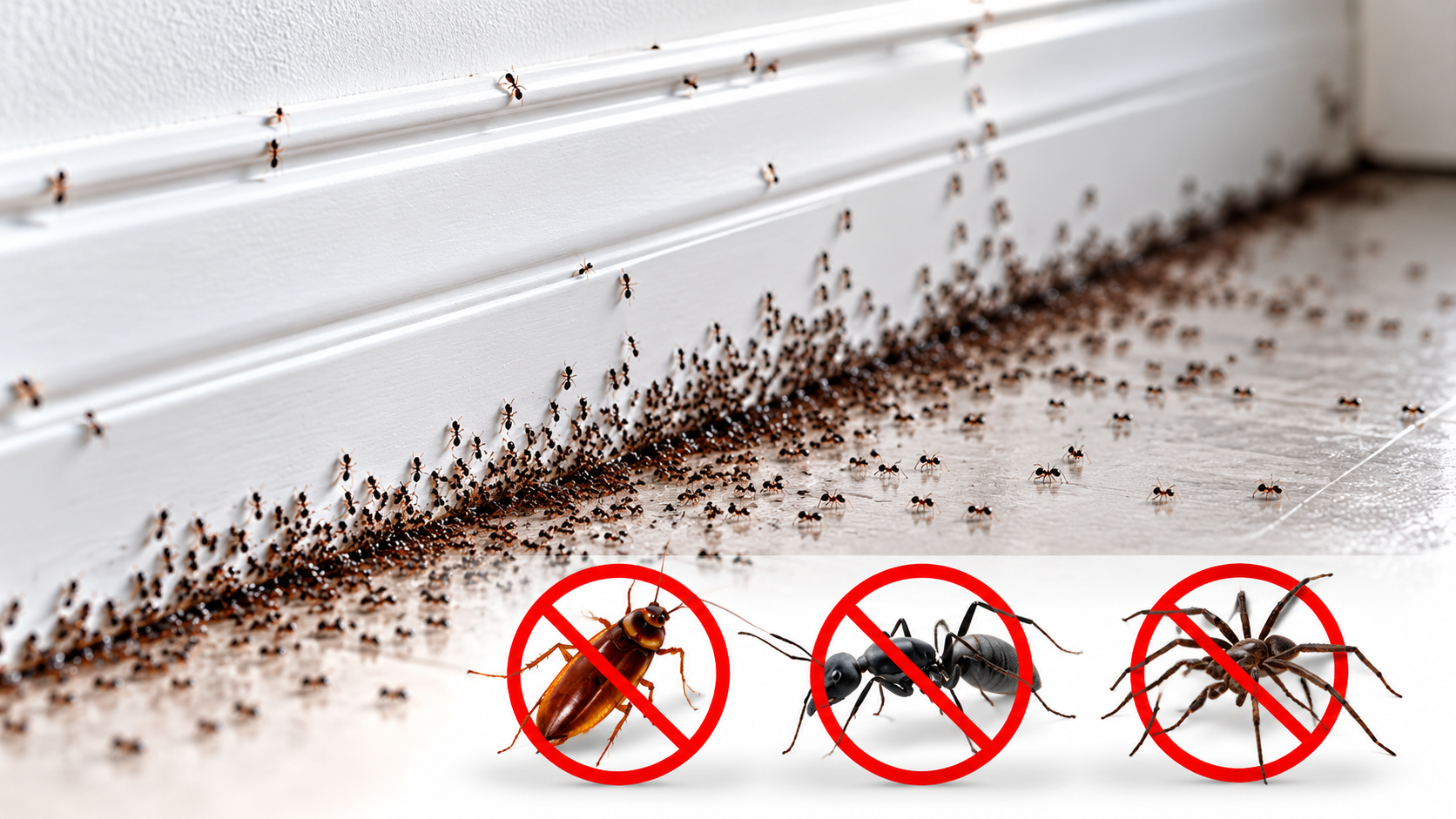
Common household pests on the Gold Coast include ants, cockroaches, spiders, rodents, termites and fleas. While seeing an occasional pest does not always mean you have an infestation, repeated sightings, property damage or signs of nesting can indicate that professional treatment is needed.
Ant trails across kitchen benches, cockroaches hiding behind appliances and scratching noises in the roof are all warning signs worth investigating. Some problems can be reduced through cleaning, better food storage and property maintenance. Others, particularly suspected termite activity and persistent rodent problems, need professional attention.
For Gold Coast homeowners, landlords and property managers, knowing the difference can help prevent minor pest activity from becoming a more difficult and costly problem.
This guide explains how to recognise common household pests, when prevention measures may be enough and when to book professional pest control.
Common Household Pests Found in Gold Coast Homes
Gold Coast properties can experience pest activity throughout the year. Warm weather, moisture, accessible food and sheltered spaces can create conditions that allow different pests to thrive.
However, not every home faces the same risks. The type and extent of pest activity depend on the property, its surroundings, maintenance and available food and water sources.
These are six common household pest groups to watch for.
1. Ants
Ants commonly appear around kitchens, pantries, outdoor dining areas and rubbish bins.
They enter homes searching for food and water, often through small gaps around doors, windows and foundations. Some species establish nests in garden beds, beneath paving and within wall cavities.
Common signs of an ant problem include:
- Regular ant trails across kitchen benches, floors or walls.
- Ants gathering around food containers, rubbish bins or pet bowls.
- Activity around cracks, skirting boards and outdoor paving.
- Ants returning soon after cleaning.
- Multiple trails entering different areas of the home.
A few ants exploring a kitchen do not necessarily require professional treatment. Start by removing accessible food, cleaning affected surfaces and checking obvious entry points.
However, persistent trails or ants returning from several locations may indicate a nearby colony that needs targeted control.
Big Red Gold Coast provides professional ant control treatments using methods such as bait gels, liquid treatments and insecticidal dust where appropriate.
2. Cockroaches
Cockroaches prefer sheltered areas with access to food and moisture. Kitchens, bathrooms, laundries and spaces behind appliances can provide suitable conditions.
Because many cockroaches are active at night, an infestation may develop before homeowners notice frequent sightings.
Warning signs include:
- Cockroaches appearing regularly, especially after dark.
- Small droppings inside cupboards or behind appliances.
- Egg cases in concealed spaces.
- Unusual musty odours associated with established infestations.
- Live cockroaches appearing during daylight hours.
Cockroaches can contaminate food preparation surfaces and may carry microorganisms. Their droppings and shed body parts can also trigger allergic reactions in susceptible people.
Seeing one cockroach does not necessarily indicate a major infestation. However, frequent sightings, particularly alongside droppings or egg cases, suggest that further investigation is worthwhile.
If cockroaches keep appearing despite improved cleaning, food storage and moisture control, professional treatment may be needed to address concealed activity.
3. Spiders
Spiders are commonly found in gardens, sheds, garages, roof spaces and sheltered corners of buildings.
Many spiders help control insect populations and pose little medical risk. However, some Australian species can be dangerous and should be treated with caution.
Signs of increased spider activity include:
- Webs repeatedly appearing around windows and outdoor lights.
- Frequent spiders in garages, sheds or storage spaces.
- Spiders regularly entering living areas.
- Activity around children’s play equipment or frequently used entrances.
Regular cleaning, removing unnecessary clutter and reducing other insect activity can help make these areas less attractive to spiders.
Not every spider sighting requires pest control. However, persistent activity around frequently used areas or suspected dangerous species warrants professional advice.
Avoid handling spiders that cannot be safely identified.
4. Rats and Mice
Rats and mice can enter homes searching for food, water and sheltered nesting spaces.
Roof voids, garages, storage areas and wall cavities can provide suitable conditions. Because rodents are often active at night, scratching sounds or droppings may be noticed before an animal is seen.
Common warning signs include:
- Scratching or movement sounds in ceilings and walls.
- Droppings in cupboards, garages or storage spaces.
- Gnaw marks on food packaging, timber or electrical wiring.
- Damaged food containers.
- Nesting materials in concealed areas.
Rodents can contaminate stored food and damage building materials. Gnawing on electrical wiring can also create safety concerns.
If you notice recurring noises, droppings or signs of gnawing, avoid disturbing nesting materials or attempting to enter unsafe roof spaces.
A professional pest assessment can help identify likely access points, areas of activity and suitable control measures.
Big Red Gold Coast offers rodent control services using traps and bait systems selected according to the property and infestation.
5. Termites
Termites are a serious concern because some species can damage structural timber and other cellulose-containing building materials.
Their activity can remain concealed inside timber, walls and other areas of a building, making early detection difficult without a professional inspection.
The Queensland Building and Construction Commission recommends arranging a professional termite inspection every 12 months, or more frequently in high-hazard areas. Regular inspections can help identify concealed termite activity and assess the condition of existing termite management systems. Homeowners should also follow any inspection and maintenance requirements specified for their property’s termite protection system.
Potential warning signs include:
- Mud shelter tubes along foundations or walls.
- Timber that sounds hollow or appears damaged.
- Unexplained changes to timber surfaces.
- Discarded wings around windows or light sources.
- Doors or windows becoming difficult to open when other causes have been ruled out.
These signs do not automatically confirm an infestation, but they should be investigated promptly.
If you suspect termite activity, arrange a specialist termite inspection rather than waiting for visible damage to worsen.
Avoid disturbing suspected activity or spraying household insecticides onto affected areas before obtaining professional advice.
Big Red Gold Coast lists termite baiting and trapping among its pest control services. A specialist assessment can help determine whether termites are present and which management options are appropriate.
6. Fleas and Other Household Pests
Other pests that may affect Gold Coast homes include fleas, silverfish, wasps and fruit flies.
Fleas can become a recurring problem in homes with pets. Effective management may require treatment of affected areas alongside suitable veterinary advice for animals.
Silverfish favour sheltered spaces and may damage paper, books and other stored materials.
Wasps may create a hazard when nests develop near entrances, outdoor seating areas or frequently used spaces.
Fruit flies can become a nuisance around exposed produce, food waste and suitable breeding sites.
These pests require different management approaches. Identifying the species and understanding where it is active can help avoid ineffective treatment.
When Should You Call a Pest Control Professional?
The presence of a pest does not always mean immediate professional treatment is necessary.
A more reliable way to judge the situation is to look at how often pests appear, whether their numbers are increasing and whether there is evidence of nesting, contamination or property damage.
Some problems may improve after cleaning, repairing leaks or removing food sources. Others require professional investigation, particularly when activity occurs inside walls, ceilings or structural timber.
The following table outlines common warning signs and the most appropriate next steps.
| Warning sign | What it may indicate | Recommended action |
| Ants repeatedly entering kitchens | Accessible food or a nearby colony | Improve food storage and consider ant control if trails persist |
| Cockroaches appearing frequently | Possible established activity or concealed hiding areas | Arrange a professional pest assessment |
| Rodent droppings or scratching noises | Possible rodents inside the property | Book an inspection and investigate access points |
| Repeated spider activity | Suitable shelter or abundant insect prey | Review property conditions and seek advice if necessary |
| Suspected termite damage or mud tubes | Possible concealed termite activity | Arrange a specialist termite inspection promptly |
| Fleas returning after treatment | Ongoing exposure or untreated flea life stages | Seek coordinated property treatment and veterinary advice |
The key difference is whether the problem is occasional and manageable or persistent, spreading and potentially harmful.
If you cannot identify the pest, are concerned about property damage or continue seeing activity despite basic prevention measures, professional advice can help clarify the next step.
Why Do Pests Keep Coming Back?
Repeated pest activity often means the conditions attracting pests have not been fully addressed.
Cleaning and household pest products may reduce what you can see without removing nearby colonies, nesting areas or access points.
Four common factors contribute to recurring problems.
Accessible Food and Water
Food scraps, unsealed pantry items, pet bowls, open rubbish bins and leaking plumbing can attract pests.
Even small amounts of food or moisture may support ongoing activity.
Keeping food sealed, removing spills and repairing leaks can reduce these attractants.
Entry Points Around the Property
Pests may enter through damaged window screens, gaps beneath doors, openings around pipes or cracks in building materials.
Some entry points are easy to identify, while others may be concealed or difficult to access.
Checking and sealing suitable openings can help limit future access.
Suitable Nesting and Hiding Areas
Cluttered storage spaces, garden debris, roof voids and wall cavities can provide shelter.
Regular maintenance may reduce these opportunities, although it will not necessarily eliminate an established infestation.
Treatments That Do Not Address the Source
Some household sprays kill visible pests without controlling the source of activity.
For example, spraying ants travelling across a kitchen bench may reduce sightings temporarily while the colony remains nearby.
A professional assessment can help identify where pests are coming from and whether targeted treatment, repairs or other prevention measures are needed.
What Happens During a Professional Pest Control Treatment?
Professional pest control involves identifying the problem and selecting an appropriate treatment for the property.
The process depends on the pest species, the extent of activity and the conditions around the building.
Big Red Gold Coast provides professional pest control services for residential and commercial properties across the Gold Coast.
A typical pest management appointment may involve four stages.
1. Identifying the Pest Problem
The technician discusses the reported pest activity and examines relevant parts of the property.
Depending on the problem, this may include kitchens, cupboards, garages, building exteriors, entry points or accessible roof spaces.
The assessment helps identify the pest and possible sources of activity.
2. Selecting a Suitable Treatment
Different pests require different control methods.
Depending on the species and conditions, treatment may involve baits, traps, sprays or dust applications.
The chosen approach should suit the pest, treatment area and relevant product instructions.
3. Treating Relevant Areas
Treatment locations depend on the pest and application method.
For general household pest management, Big Red describes internal and external treatments targeting areas such as skirting boards, cupboards, accessible building exteriors and concealed insect hiding places.
Not every method is appropriate for every property. Applications should follow relevant safety and product requirements.
4. Providing Prevention Guidance
Following the assessment or treatment, the technician may recommend changes to cleaning, food storage, waste management, moisture control or property maintenance.
These recommendations can help reduce conditions that contribute to recurring infestations.
Before your appointment: Ask whether furniture needs to be moved, cupboards cleared or arrangements made for children and pets.
Follow all preparation requirements and instructions about when treated areas can safely be used again.
When Is the Best Time of Year for Pest Control on the Gold Coast?
Pests can be active in Gold Coast homes throughout the year, although seasonal weather conditions may influence which species are most noticeable.
Rather than relying on one treatment month, it is more useful to monitor warning signs and respond when activity develops.
Spring and Summer
Warmer conditions can increase activity among several insect species, including ants and cockroaches.
Outdoor dining, food waste and open doors or windows may also create additional opportunities for pests to enter homes.
Check food storage areas, bins, window screens and locations where insects have previously appeared.
Autumn and Winter
As conditions change, some pests may seek shelter in protected parts of a property.
Rodent activity in roof voids, garages and storage areas can become more noticeable.
If you hear repeated scratching sounds or find droppings, investigate rather than assuming the problem will disappear when the season changes.
Year-Round Pest Prevention
There is no universal pest treatment schedule that suits every home.
The appropriate timing depends on the species, property conditions, previous infestations and treatment recommendations.
Some homes may benefit from preventative pest management, while others may only need professional assistance when activity is identified.
A qualified technician can recommend an approach based on the property’s circumstances.
Pest Control Considerations for Landlords and Property Managers
Pest activity in rental properties can affect tenant comfort, building conditions and ongoing maintenance.
Landlords and property managers should investigate reported problems, particularly where infestations may be linked to building defects, leaks or concealed entry points.
Property checks can help identify:
- Gaps around doors, windows and service penetrations.
- Leaking pipes and persistent moisture.
- Poor rubbish storage or waste accumulation.
- Signs of rodents in garages or roof spaces.
- Possible termite activity or timber damage.
Tenants should report suspected infestations promptly and keep records of relevant observations.
Who Is Responsible for Pest Control in a Queensland Rental Property?
Queensland rental properties must meet applicable minimum housing standards, including requirements relating to pests and vermin.
Responsibility for pest management depends on the cause, timing and circumstances of the infestation.
A pest problem identified at the beginning of a tenancy may involve different responsibilities from one arising later because of property use or maintenance.
End-of-lease pest treatment is not automatically required in every rental property.
Landlords, tenants and property managers should consult their tenancy agreement and current Queensland Residential Tenancies Authority guidance before deciding who must organise or pay for treatment.
8 Ways to Help Prevent Household Pests
Good property maintenance can reduce the conditions that attract pests and make future problems easier to manage.
- Keep food sealed. Store pantry items and pet food in suitable containers.
- Clean food preparation areas. Remove crumbs, spills and grease, including around appliances.
- Manage household rubbish. Empty bins regularly and keep lids closed.
- Repair leaks. Fix dripping taps, plumbing faults and persistent moisture problems.
- Check entry points. Inspect door seals, window screens and accessible gaps around pipes.
- Reduce clutter. Keep cupboards, garages and storage spaces organised.
- Maintain outdoor areas. Trim vegetation touching buildings and remove unnecessary garden debris.
- Monitor recurring activity. Note where and when pests appear so patterns are easier to identify.
These measures can help reduce pest pressure, but they may not resolve established infestations.
When pests continue returning despite preventative efforts, a professional assessment can help identify the underlying problem.
Frequently Asked Questions About Pest Control on the Gold Coast
How Often Should a House Receive Professional Pest Control?
There is no fixed treatment frequency suitable for every home.
The appropriate schedule depends on pest activity, building conditions, previous infestations and the treatment used.
A qualified pest control technician can recommend suitable intervals following a property assessment.
Should I Book Pest Control if I Only See a Few Ants?
Not necessarily.
Start by cleaning affected areas, securing food and checking obvious entry points.
If ant trails persist, numbers increase or ants repeatedly return, professional control may be appropriate.
Is Professional Pest Control Safe for Children and Pets?
Treatment safety depends on the product, application method and whether safety instructions are followed.
Tell the technician about children, pets and relevant household concerns before treatment.
Follow all preparation, access and re-entry instructions.
Can Pests Return After Professional Treatment?
Yes. Reinfestation is possible if pests re-enter the property, untreated sources remain or conditions continue to attract them.
Some treatment programs may require monitoring or follow-up visits.
Following prevention recommendations can help reduce recurring activity.
Do Landlords Need to Organise Pest Treatment Before Tenants Move In?
Queensland rental properties must meet applicable minimum housing standards, including requirements relating to pests and vermin.
Whether treatment is required depends on the property’s condition and relevant tenancy obligations.
Landlords and tenants should consult current Residential Tenancies Authority guidance for their circumstances.
Book Professional Pest Control on the Gold Coast
If ants keep returning, cockroaches are appearing regularly or you have noticed signs of rodents or termites, it may be time to arrange professional advice.
Ignoring recurring pest activity can allow the underlying problem to continue, particularly when pests are nesting in concealed areas or damaging building materials.
A professional assessment can help identify the pest, investigate likely sources of activity and determine which treatment options are suitable.
Big Red Gold Coast provides pest control services for homeowners, landlords, property managers and businesses across the Gold Coast and Brisbane Southside.
Whether you are dealing with recurring household pests or need advice about a suspected infestation, contact Big Red Gold Coast to discuss your property and available treatment options.
Request a Free Pest Control Quote from Big Red Gold Coast
Or call 07 5539 6799 to enquire about professional pest control services.