


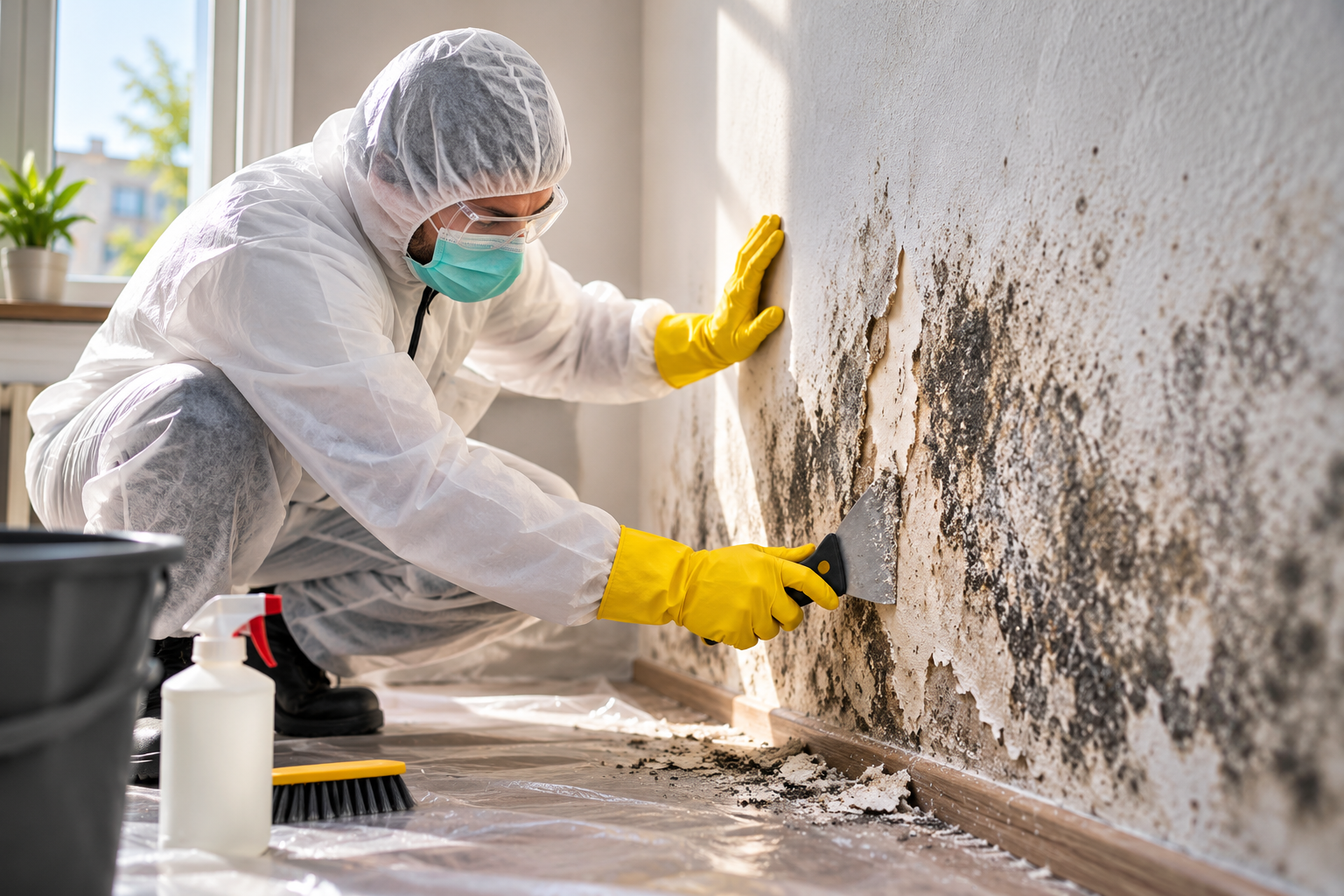
Mould keeps returning after cleaning? Can you smell dampness but cannot find the source? Or have you discovered a large patch of visible mould?
The right service depends on what you know about the problem. A mould inspection helps identify affected areas, hidden moisture and possible causes. Professional mould removal addresses contamination on surfaces and materials. More extensive mould remediation may be necessary when contamination involves concealed areas, damaged materials or ongoing moisture problems.
For Gold Coast homeowners, landlords and property managers, choosing the right approach starts with understanding the cause and extent of the mould.
This guide explains the differences, when to consider each service and what to ask before arranging professional treatment.
Mould Inspection or Removal: Which Do You Need?
You may not need a separate detailed inspection before every mould removal job. However, an initial assessment helps establish the appropriate treatment, particularly when the cause or extent of the problem is uncertain.
| Property situation | Recommended next step |
| Musty smell but no visible mould | Arrange an inspection to investigate possible concealed growth |
| Mould repeatedly returns after cleaning | Investigate moisture sources before further treatment |
| Large areas of visible mould | Seek a professional removal assessment |
| Mould following flooding or water damage | Assess moisture conditions and possible remediation needs |
| Mould behind walls or beneath flooring | Arrange a professional assessment before disturbing materials |
| Mould affecting several rooms | Investigate the extent of contamination and possible shared moisture sources |
The services often overlap. A mould removal technician may assess the affected area before quoting, while a more complex problem may require further investigation and a broader remediation plan.
If you need advice about visible or recurring mould, explore Big Red Gold Coast’s professional mould removal services.
What Is a Professional Mould Inspection?
A professional mould inspection examines a property for visible or suspected mould, moisture problems and conditions that may allow mould to develop or return.
The aim is to understand the extent of the issue, identify possible moisture sources and recommend appropriate next steps.
An inspection is especially useful when the problem cannot be fully explained by what is visible.
What happens during a mould inspection?
Depending on the property and the suspected problem, an inspection may include:
- Examining affected walls, ceilings, flooring and other accessible surfaces.
- Identifying visible mould, staining and signs of water damage.
- Measuring moisture levels in accessible building materials.
- Investigating possible leaks, condensation and ventilation problems.
- Assessing areas where concealed moisture or contamination is suspected.
- Recommending further investigation, removal or remediation where appropriate.
Big Red Gold Coast’s mould service process includes inspecting affected areas, tracing moisture and discussing suitable treatment options.
An inspection does not automatically require laboratory testing. In many cases, visible mould, moisture readings and the property’s history provide useful information for deciding what needs to happen next.
What Is Professional Mould Removal?
Professional mould removal involves removing contamination from affected surfaces and materials using methods suited to the type and extent of the problem.
The treatment depends on the materials involved, the amount of contamination and whether mould has affected areas that cannot be reached through ordinary cleaning.
For example, mould on some hard surfaces may be removable through suitable cleaning methods. Porous materials, including plasterboard, insulation, carpets and certain furnishings, can be more difficult to treat because contamination may extend beneath the surface.
Heavily damaged or contaminated materials may need to be removed and replaced.
When should you consider professional mould removal?
Professional treatment is particularly relevant when:
- Mould covers a large area or several surfaces.
- Growth repeatedly returns after cleaning.
- Contamination affects multiple rooms.
- Mould is present on porous or deteriorating materials.
- The affected area is difficult to reach safely.
- You suspect contamination extends beyond the visible surface.
A technician should assess the affected materials and explain the proposed treatment before work begins.
For information about available treatments, visit Big Red’s mould removal service page.
What Is Mould Remediation?
Mould remediation is a broader approach to managing contamination and the conditions that support mould growth.
Depending on the problem, it may involve inspection, containment, removal of contaminated materials, cleaning, drying and recommendations for controlling moisture.
Consider a wall affected by a concealed plumbing leak. Cleaning the visible mould may improve its appearance, but it will not resolve the leak or any contamination within the wall.
An effective remediation plan may require the leak to be repaired, damaged materials to be assessed and affected sections to be cleaned or replaced.
Plumbing, roofing, waterproofing and building repairs may need to be arranged separately from the mould treatment.
The important distinction is that removal deals with contamination, while remediation considers the broader work required to manage the problem.
5 Signs Your Property Needs a Mould Inspection First
If the cause or extent of your mould problem is unclear, an inspection can help establish the next step.
1. You can smell mould but cannot see it
A persistent musty or earthy smell can indicate damp materials or concealed mould.
Possible locations include wall cavities, roof spaces, areas behind cabinets and beneath flooring.
A professional assessment can help investigate suspected hidden contamination without unnecessarily disturbing building materials.
Avoid opening walls or removing potentially contaminated materials without suitable precautions.
2. Mould keeps returning after cleaning
Recurring mould often suggests that the underlying moisture conditions have not been resolved.
Possible causes include:
- Plumbing leaks.
- Roof or gutter damage.
- Condensation on cold surfaces.
- Inadequate bathroom or laundry ventilation.
- Water entering through building defects.
- Moisture remaining after previous water damage.
Cleaning may remove the visible growth, but further investigation may be needed to understand why it keeps returning.
3. There are unexplained damp patches
Water staining, peeling paint, damp skirting boards and deteriorating plasterboard can indicate moisture affecting building materials.
These symptoms can result from several causes, including leaks, condensation or water entering through damaged building elements.
Moisture measurements and a physical assessment can help determine whether further investigation or repairs are required.
4. The property has experienced water damage
Burst pipes, roof leaks, appliance failures and flooding can introduce moisture into walls, floors, carpets and other materials.
According to NSW Health’s mould prevention guidance, water-damaged surfaces should be cleaned and dried within 48 hours to help prevent mould growth. This highlights the importance of responding promptly to leaks and flooding. Where moisture has entered walls, flooring or other concealed areas, professional assessment may be needed to determine the extent of the damage and appropriate drying measures.
Even after visible water is removed, moisture may remain trapped beneath flooring or within building structures.
Where mould is suspected after flooding or a significant leak, both moisture conditions and contamination should be considered.
Big Red provides water damage restoration services, including water extraction, structural drying and moisture monitoring.
5. Mould is appearing in several rooms
Mould in multiple locations can suggest broader humidity, ventilation or water intrusion problems.
However, individual rooms may also have different causes.
An inspection can help identify the affected areas and determine whether the problems are connected or need separate treatment.
Can Small Areas of Mould Be Cleaned Without Professional Removal?
Some limited surface mould can be cleaned using appropriate precautions, provided the affected material is suitable for cleaning and the moisture problem can be addressed.
The Australian Government’s enHealth guidance on mould explains that household detergent or white vinegar is often suitable for cleaning mould from appropriate surfaces. It also recommends professional advice for large areas, repeated growth or suspected concealed mould.
The safest approach depends on the materials, the extent of contamination and the circumstances of the occupants.
When cleaning may not be enough
Professional advice is recommended when mould affects large areas, has repeatedly returned or involves water-damaged porous materials.
Specialist methods may be necessary to prevent contaminated dust and debris from spreading during treatment.
People with asthma, allergies, respiratory conditions or weakened immune systems may be more susceptible to problems associated with damp and mould exposure.
If an occupant is experiencing symptoms or has particular health concerns, seek medical advice. For more information about cleaning precautions, see Queensland Health’s mould guidance.
Is Mould Testing Necessary Before Removal?
Mould testing is not automatically required before professional removal.
When mould is already visible, the priority is usually to identify the source of moisture and determine how to address the contamination.
Australian enHealth guidance generally does not recommend routine mould testing to assess health risk because there are no established health-based exposure limits against which to compare results.
Air or surface sampling may still have a role in a particular investigation, but testing should have a clear purpose.
Before paying for sampling, ask:
- What information will the test provide?
- Why is testing necessary in this situation?
- Will the results change the recommended treatment?
- Who will interpret the findings?
A professional should be able to explain why testing is being recommended and how the results will inform the next steps.
What Happens After a Mould Inspection?
The process depends on what the technician finds, but generally follows several stages.
Step 1: Review the findings
The technician assesses the affected areas, moisture conditions and any limitations of the inspection.
If there is evidence of possible concealed contamination, further investigation may be recommended.
Step 2: Identify the moisture problem
The next priority is understanding why the affected materials became damp.
This could involve a plumbing leak, condensation, damaged roofing or another source of water intrusion.
Where the exact cause cannot be established during the initial inspection, additional investigation may be necessary.
Step 3: Agree on the treatment scope
The recommended work should reflect the type and extent of contamination.
Possible measures include surface cleaning, specialist removal, containment, material replacement or more extensive remediation.
Step 4: Clarify repairs and exclusions
Some mould problems require building repairs beyond the removal treatment.
Ask whether plumbing, roofing, waterproofing, structural drying, material replacement and follow-up assessment are included in the proposed service.
Step 5: Complete the approved work
Once the treatment scope is agreed, the technician carries out the work using methods appropriate to the affected materials and conditions.
Step 6: Address ongoing moisture risks
Treatment should be supported by suitable moisture management.
This may involve repairing leaks, improving ventilation, controlling condensation or addressing building defects.
Additional assessment may be appropriate if moisture conditions or contamination remain unresolved.
Why Moisture Control Matters After Mould Removal
Mould can return when the moisture conditions that supported its growth remain.
For example, cleaning mould from a bathroom ceiling may remove visible staining, but condensation can continue if ventilation is inadequate.
Similarly, removing mould from an internal wall may have limited long-term benefit if a concealed pipe continues to leak.
Common moisture sources worth investigating include leaking plumbing connections, damaged roofs, blocked gutters, inadequate extraction ventilation, water intrusion through building defects and residual moisture after flooding.
The goal is not simply to improve the appearance of an affected surface. It is to manage existing contamination and reduce the conditions that allow new growth.
No treatment can guarantee that mould will never return, particularly if moisture problems develop again.
Mould Inspection for Gold Coast Homes and Rental Properties
Different property types can present different challenges. The appropriate approach should reflect the building’s condition, occupants and extent of contamination.
Homeowners
Homeowners may discover mould around windows, on ceilings, inside cupboards or in rooms affected by condensation and leaks.
An inspection can be helpful when growth returns, spreads or appears in an area without an obvious moisture source.
Landlords and rental properties
Queensland’s minimum housing standards require rental properties to be free from damp and mould, except where the issue has been caused by the tenant.
When mould is reported, the cause matters. A leaking roof or building defect may require action by the property owner or manager, while responsibilities can differ where occupant actions caused the problem.
The Residential Tenancies Authority’s mould guidance explains how responsibility for cleaning, repairs and associated costs depends on the cause.
Landlords and property managers should keep records of mould reports, inspections, recommended work and completed repairs.
Property managers
Property managers often need to coordinate inspections, access arrangements, quotations and repairs on behalf of owners.
A clear explanation of the affected areas and proposed work can help everyone understand what is required.
Strata-managed properties
Mould in an apartment may involve moisture entering from adjoining units, shared plumbing or common building elements.
Where the source may involve common property, the body corporate or relevant building representative may need to assist with further investigation.
Questions to Ask Before Booking Mould Inspection or Removal
Before approving an inspection or treatment, make sure you understand what the provider will assess and what the proposed work includes.
- Is the initial inspection included in the removal quotation, or can it be booked separately?
- Will the technician investigate likely moisture sources?
- Are moisture readings included?
- Can suspected hidden mould be assessed without immediately opening building materials?
- Is mould sampling necessary?
- Will I receive written findings or a treatment recommendation?
- What surfaces and materials are included in the quotation?
- Will containment or structural drying be required?
- Are plumbing, roofing or building repairs excluded?
- Is any follow-up assessment recommended?
Clear answers can prevent confusion about what is being inspected, treated or repaired.
Frequently Asked Questions About Mould Inspection and Removal
Do I need an inspection before professional mould removal?
A technician should assess the affected area before selecting a treatment method. A separate, more detailed inspection may be useful when mould is hidden, recurring or associated with unexplained moisture.
What is the difference between mould inspection and mould testing?
A mould inspection examines the property for contamination and moisture-related conditions. Mould testing involves collecting and analysing samples. Testing is not routinely necessary when visible mould already establishes that action is required.
Can mould grow behind walls?
Yes. Mould can grow within wall cavities, roof spaces and beneath flooring where moisture is present. Persistent musty smells, previous water damage or unexplained staining may justify further investigation.
Will professional mould removal stop mould returning?
Removal addresses existing contamination, but ongoing prevention depends on controlling moisture. Leaks, condensation and water intrusion should be addressed to reduce the likelihood of further growth.
How long does a mould inspection take?
The duration depends on property size, access, the number of affected areas and the complexity of the moisture problem. Ask the provider about the expected inspection scope when making an enquiry.
Can a mould inspection identify water damage?
An inspection may identify visible signs of water damage and use moisture measurements to assess affected materials. More detailed investigation may be required where water damage is concealed or extensive.
Who is responsible for mould in a Queensland rental property?
Responsibility depends on the cause. Property owners or managers are generally responsible for addressing mould caused by structural defects or problems arising from reasonable use of the property. Tenants must report mould promptly and may be responsible where their actions caused it. Refer to the Residential Tenancies Authority for guidance on individual circumstances.
Book Mould Inspection or Removal on the Gold Coast
If mould keeps returning, you suspect hidden contamination or you are unsure how extensive the problem is, arranging a professional assessment is a sensible next step.
Where mould is already visible, a technician can assess the affected materials and recommend appropriate removal or remediation work.
Big Red Gold Coast provides professional mould removal and remediation services for residential and commercial properties across the Gold Coast and surrounding service areas. Its mould service process includes inspection, moisture investigation and recommendations for appropriate treatment.
Visit Big Red Gold Coast’s mould removal and inspection service page to enquire about your property and request a quotation.
If the mould problem is associated with flooding, a burst pipe or significant water intrusion, you can also enquire about professional water damage restoration.
Speak with Big Red Gold Coast about your mould problem and the most appropriate next step.