


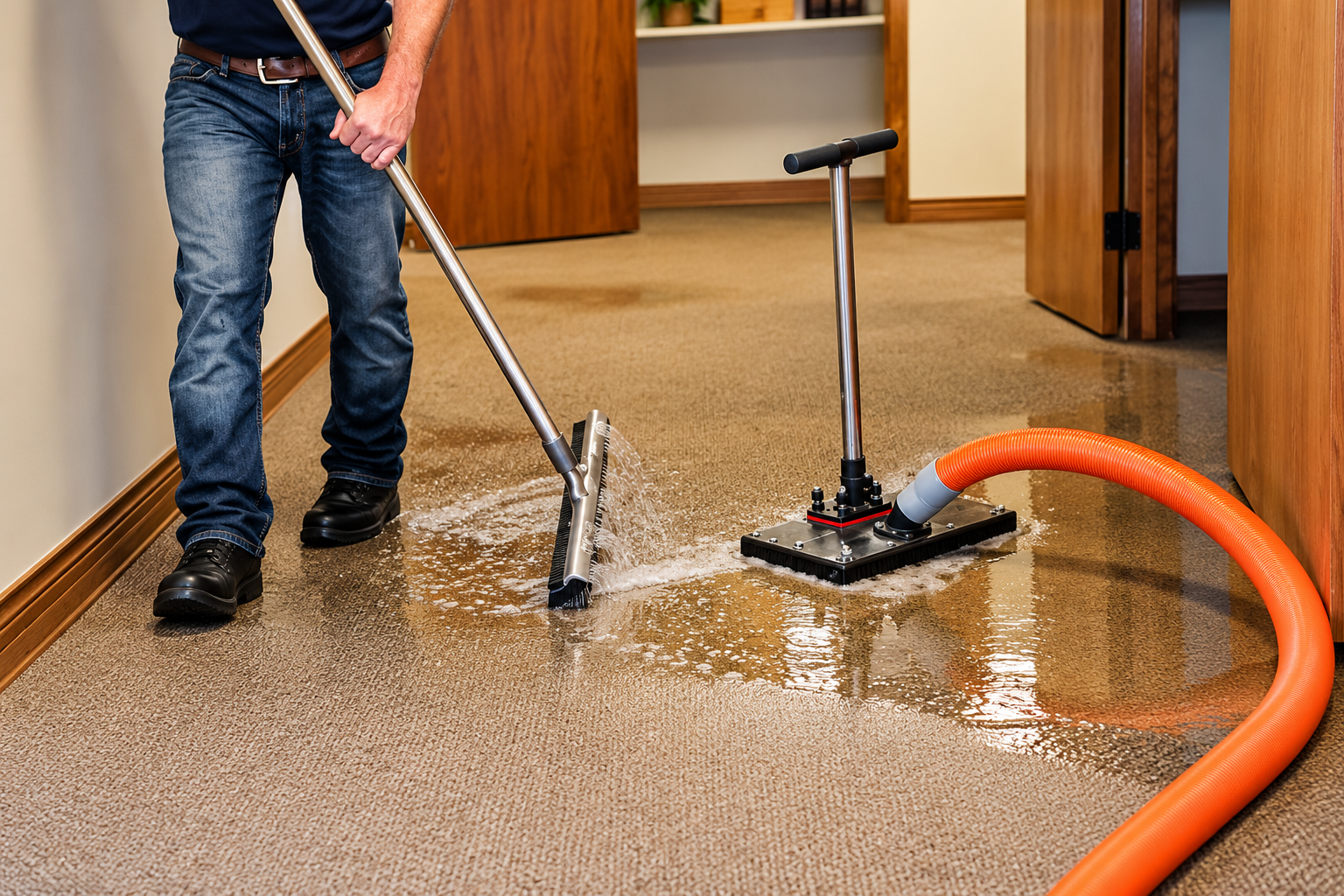
Flooded carpet on the Gold Coast needs prompt attention, but safety comes first. Keep people and pets away from affected areas, avoid electrical hazards and stop the water source only if you can do so safely.
Whether the flooding comes from a burst pipe, overflowing appliance, storm or drain backup, water can quickly soak through carpet into the underlay, subfloor and surrounding building materials. Even when the carpet surface begins to dry, moisture may remain trapped underneath.
If your carpet is saturated, professional water extraction and drying may be needed to reduce further damage and determine whether the affected materials can be restored.
Big Red Gold Coast provides water extraction and water damage restoration services for residential and commercial properties, including emergency water removal, carpet drying, structural drying and moisture monitoring.
This guide explains what to do immediately after discovering flooded carpet, which mistakes to avoid and when to arrange professional water damage restoration.
5 Immediate Steps When Your Carpet Is Flooded
If you discover water in a carpeted room, prioritise safety before attempting to protect belongings or remove water.
Follow these steps in order, but only enter or handle affected areas when it is safe.
1. Check for Immediate Safety Hazards
Keep children, other occupants and pets away from flooded areas.
Do not enter a room if:
- Electrical outlets, appliances or wiring may have been affected.
- Standing water is close to electrical equipment.
- Sewage or other contamination may be present.
- Ceilings, walls or other building elements appear unstable.
- You cannot safely assess the conditions.
If electrical systems may have been affected, seek advice from a licensed electrician before entering the area or using the equipment.
Queensland’s Electrical Safety Office warns against touching water-damaged electrical equipment or switchboards and attempting electrical work after storms and floods.
Never walk through floodwater to reach a switchboard or power outlet.
2. Stop the Water Source if Safe
If a burst pipe or appliance leak caused the flooding, stopping the water supply may help prevent further damage.
Turn off the main water supply only if you can reach it without entering a hazardous area.
Do not attempt electrical repairs, move affected appliances or carry out plumbing work beyond your ability.
If the source cannot be stopped safely, keep clear and contact an appropriate professional.
3. Contact a Professional Water Extraction Service
If water has saturated the carpet or spread into surrounding materials, arrange a professional assessment promptly.
Explain:
- Where the flooding occurred.
- When you first noticed the water.
- The suspected cause.
- Which rooms are affected.
- Whether standing water remains.
- Whether contamination or electrical hazards are suspected.
This information can help the restoration team understand the situation and discuss appropriate next steps.
4. Photograph and Document the Damage
If the area is safe to access, photograph the visible damage before moving affected belongings.
Useful records include:
- Wet carpets and surrounding flooring.
- Standing water or visible water levels.
- Affected furniture and skirting boards.
- Damaged walls or ceilings.
- The suspected source of the flooding.
Keep these records for your insurer, landlord, property manager or restoration provider.
Do not enter an unsafe area solely to take photographs.
5. Protect Unaffected Belongings Where Possible
If the area has been assessed as safe, move dry belongings away from spreading water.
Avoid lifting saturated carpet, moving heavy water-damaged furniture or disturbing materials that may be contaminated.
Protecting belongings can help limit additional damage, but it should never take priority over personal safety.
Why You Should Act Quickly After Carpet Flooding
Water damage often extends beyond what you can see.
Carpet, underlay, subfloors and adjoining walls can absorb moisture. The longer materials remain wet, the more difficult restoration may become.
Water Can Soak Into Carpet Underlay
Underlay sits beneath the visible carpet and can retain water after the surface begins to feel dry.
If moisture remains trapped, it may contribute to persistent dampness, unpleasant odours and contamination.
A professional assessment helps determine whether the underlay can be appropriately dried or needs replacement.
Moisture Can Reach the Subfloor
Water can move through carpet and underlay into concrete, timber or other subfloor materials.
The extent of absorption depends on the flooring construction, water source and duration of exposure.
Removing visible water does not necessarily mean the subfloor is dry.
Moisture measurements may be needed to establish whether additional drying is required.
Damp Conditions Can Support Mould Growth
Mould can develop where building materials remain damp, particularly when moisture is trapped in poorly ventilated spaces.
Queensland Government flood health and safety guidance highlights the health risks associated with floodwater, dampness and mould.
Prompt extraction and appropriate drying can help reduce conditions that support mould growth.
However, no treatment can guarantee mould prevention if moisture remains or another leak occurs.
Water Can Spread Into Adjoining Areas
Floodwater can travel beneath doors, through flooring materials and into nearby rooms.
Moisture may also affect skirting boards, wall linings and other building elements.
A professional inspection should consider the surrounding areas, not just the section of carpet that looks wet.
Can Flooded Carpet Be Saved?
Some flooded carpets can be restored. Others may need to be removed and replaced.
The decision depends mainly on the water source, contamination risk, how long the carpet has been wet and the condition of the carpet, underlay and subfloor.
Big Red Gold Coast’s existing guide, Can Flooded Carpet Be Saved?, explains the importance of assessing these factors before deciding whether restoration is suitable.
Clean Water From a Burst Pipe
Water from a clean internal supply pipe may provide a better opportunity for carpet restoration, particularly when flooding is discovered promptly.
However, the source alone does not guarantee that the carpet can be retained.
A technician must also consider how long the materials have been wet, what the water has contacted and whether contamination has occurred.
Stormwater Entering the Property
Stormwater can carry soil, debris and other contaminants into a building.
The level of contamination depends on where the water came from and what it contacted.
Avoid assuming that stormwater is clean simply because it appears clear.
Professional assessment is needed before deciding whether affected carpet and underlay can be restored.
Sewage or Drain Overflow
Sewage backups and contaminated drain overflows can introduce significant biological hazards.
Keep people and pets away from affected areas and avoid handling contaminated materials.
Specialist restoration is necessary to assess the contamination and determine safe removal and cleaning requirements.
Heavily contaminated carpets and underlay may need to be disposed of rather than restored.
Carpet That Has Remained Wet
A carpet left wet for an extended period may be harder to restore, even when the original water source was relatively clean.
Prolonged moisture can contribute to material deterioration, contamination and water spreading into surrounding structures.
An inspection is the appropriate way to determine whether drying and restoration remain practical.
When to Call a Professional Water Extraction Service
Professional water extraction should be considered promptly when flooding saturates carpet, reaches underlay or affects surrounding building materials.
The following table outlines common incidents and appropriate responses.
| Flooding situation | Main concern | Recommended action |
| Burst pipe affecting a carpeted room | Saturated carpet, underlay and subfloor | Stop the supply if safe and arrange professional extraction |
| Washing machine overflow | Water spreading beneath flooring and fixtures | Isolate the source safely and arrange an assessment |
| Roof leak during a storm | Wet carpet, ceiling and wall materials | Avoid unsafe areas and request a water damage assessment |
| Stormwater entering the building | Possible contamination and hidden moisture | Avoid contact with floodwater and seek professional restoration |
| Sewage or drain backup | Biological contamination | Isolate the area and arrange specialist restoration |
| Carpet remains damp after surface water removal | Moisture trapped in underlay or subfloor | Request professional moisture assessment and drying |
| Multiple rooms affected | Extensive water migration | Arrange comprehensive extraction and structural drying assessment |
If electrical hazards, contaminated water or structural instability are suspected, do not enter the area.
Water extraction should not begin until the affected work area can be accessed safely.
What Not to Do With Flooded Carpet
Trying to remove floodwater without understanding the risks can cause further damage or expose people to hazards.
Avoid the following mistakes while arranging professional assistance.
Do Not Use Ordinary Electrical Appliances
Household vacuum cleaners and standard electrical appliances should not be used to remove floodwater.
Water and damaged electrical equipment can create an electrocution risk.
Do not operate electrical equipment affected by flooding until it has been assessed and declared safe by an appropriately qualified professional.
Do Not Assume Surface Drying Is Enough
A carpet may feel dry while its underlay or subfloor remains damp.
Household ventilation and fans may assist with some minor moisture problems when conditions are safe, but they cannot establish whether concealed building materials have dried adequately.
Substantial flooding may require controlled structural drying and moisture monitoring.
Do Not Apply Household Carpet Cleaners to Contaminated Water Damage
Ordinary carpet cleaners are not suitable substitutes for professional flood restoration where sewage, drain overflow or other contamination may be present.
Using unsuitable chemicals can introduce additional hazards and complicate the cleaning process.
Leave potentially contaminated materials undisturbed until they have been assessed.
Do Not Walk Through Contaminated Floodwater
Floodwater may contain microorganisms, chemicals, sharp debris and other hazards.
The Australian Red Cross provides advice on protective equipment, hygiene and safe cleanup following disasters.
Where contamination is suspected, isolate the area and obtain professional assistance.
Do Not Pull Up Saturated Carpet Without an Assessment
Lifting flooded carpet may disturb contaminated material, damage flooring or expose areas requiring specialist handling.
Following significant flooding, a technician should inspect the carpet, underlay and underlying materials to determine whether removal is necessary.
How Does Professional Water Extraction Work?
Professional flood restoration involves more than removing water from the carpet surface.
Water extraction removes accessible excess water. Structural drying addresses moisture remaining in flooring and building materials.
Both may be necessary after substantial flooding.
Big Red Gold Coast describes a restoration process involving inspection, water extraction, structural drying and ongoing moisture monitoring.
1. Initial Inspection and Moisture Detection
The technician examines affected rooms and assesses where water may have travelled.
The inspection may include:
- Carpet and underlay.
- Subfloors.
- Skirting boards.
- Adjoining walls.
- Other affected building materials.
Moisture-detection equipment helps identify areas requiring extraction or drying.
2. Water Extraction
Professional extraction equipment removes standing water and excess moisture from accessible affected areas.
The method depends on the amount of water, carpet construction and contamination conditions.
Extraction reduces the volume of water remaining before further drying work begins.
It does not automatically mean that underlay, subfloors or surrounding building materials are dry.
3. Carpet and Underlay Assessment
The technician evaluates whether the carpet and underlay are suitable for restoration.
Important factors include:
- The water source.
- Possible contamination.
- Duration of exposure.
- Material condition.
- Moisture affecting surrounding areas.
Replacement may be necessary where safe restoration is not practical.
4. Structural Drying
After excess water has been extracted, remaining moisture may require specialised drying equipment.
Big Red Gold Coast describes using professional air movers and dehumidifiers for carpet and structural drying.
Equipment selection and placement depend on the building materials and moisture conditions.
Drying requirements should be based on the actual damage rather than a fixed period applied to every property.
5. Moisture Monitoring
Technicians use moisture measurements to assess drying progress.
Monitoring may be required where water has entered subfloors, walls or other concealed building areas.
This helps determine whether additional drying is necessary before restoration work proceeds.
6. Restoration Recommendations
Once affected materials have been assessed and the necessary drying work completed, the technician can identify remaining damage.
Further work may include suitable cleaning, replacement of materials or repairs arranged separately.
The recommended scope depends on the property’s condition and the work agreed with the customer.
Why Professional Water Extraction Differs From Carpet Cleaning
Regular carpet cleaning and emergency water extraction solve different problems.
Professional carpet cleaning addresses everyday soiling, accumulated dirt and certain stains.
Emergency water damage restoration focuses on uncontrolled water intrusion, contamination risks and moisture affecting carpets and building materials.
A flooded carpet may need extraction, underlay assessment, structural drying and moisture monitoring before ordinary cleaning can be considered.
This distinction matters because cleaning the visible carpet surface does not resolve water trapped beneath it.
Big Red Gold Coast provides both carpet cleaning and water damage restoration services. The appropriate service depends on the source, extent and condition of the water damage.
Flooded Carpets in Gold Coast Homes, Apartments and Commercial Properties
Flooding can affect different building types, and each may involve particular access, safety and restoration requirements.
Residential Homes
Burst pipes, leaking appliances and stormwater can affect carpeted bedrooms, hallways and living areas.
Water may spread into underlay, skirting boards, walls and flooring substrates.
Homeowners should stop the source where safe, document visible damage and arrange professional assessment when significant water intrusion has occurred.
High-Rise Apartments
Water entering an upper-level apartment may travel into neighbouring units or shared building areas.
Property owners and occupants may need to notify building management or the body corporate so adjoining areas can be investigated.
Big Red Gold Coast describes restoration experience involving multi-unit water damage, moisture monitoring and insurance-related documentation.
Where shared areas may be affected, coordinating access and reporting the incident promptly can help clarify the extent of the damage.
Rental Properties
Tenants should report flooding promptly to their landlord or property manager.
Avoid attempting unsafe cleanup work or using water-damaged electrical equipment.
Property managers should arrange suitable assessment, document the incident and coordinate necessary repairs and restoration access.
Responsibility for the work and associated costs depends on the source of the damage and applicable tenancy arrangements.
Commercial Properties
Flooding in offices, accommodation properties and retail premises can affect business operations, staff safety and customer access.
Managers may need to isolate affected spaces, arrange electrical safety checks and coordinate restoration work around building access.
A professional assessment can help establish the extent of the damage and what is required before affected areas return to use.
What Information Should You Give a Water Damage Restoration Technician?
When contacting a water extraction service, provide as much reliable information as you can without entering unsafe areas.
When reporting flooding, provide the following details:
- Property location and building type
- Time the flooding first became apparent
- Suspected source of the water
- Rooms or areas affected by flooding
- Presence of standing water
- Water damage to carpets, walls or furniture
- Possible sewage or other contamination
- Electrical or structural safety concerns
- Insurance or property management requirements
Photographs may help document the damage and explain the situation. Only take photos when conditions are safe.
An initial discussion can help the provider understand the incident, but the final restoration scope should be based on the property’s actual condition and an appropriate assessment.
Will Home Insurance Cover Flooded Carpet and Water Extraction?
Insurance coverage depends on your policy, the cause of the water damage and the circumstances of the incident.
The scale of storm-related insurance claims in Queensland highlights why documenting property damage matters.
The Insurance Council of Australia reported more than 133,000 insurance claims following ex-Tropical Cyclone Alfred in 2025, with insured losses reaching approximately $1.5 billion across Queensland and northern New South Wales. These figures include various types of property damage beyond flooding and water-damaged carpets.
Insurance coverage may vary depending on the cause of the damage, including burst pipes, gradual leaks, stormwater entry or external flooding.
Contact your insurer as soon as practical to discuss the incident and any claim requirements.
Where safe, keep records of:
- The date and suspected cause of the flooding.
- Photographs of affected rooms and belongings.
- Communications with the insurer.
- Restoration assessments and quotations.
- Invoices and relevant drying documentation.
Insurance requirements should not prevent urgent action necessary to protect people or limit further damage.
Big Red Gold Coast advertises restoration services associated with insurance work. Confirm which reports, photographs or other documentation can be supplied for your incident.
Frequently Asked Questions About Flooded Carpet
How Quickly Should Flooded Carpet Be Professionally Extracted?
Arrange an assessment as soon as the area can be accessed safely.
Prompt extraction can help reduce prolonged moisture exposure and establish the need for further drying.
The response depends on the water source, contamination risks and materials affected.
Can a Wet Carpet Dry Naturally?
Minor surface dampness may dry under suitable conditions.
However, substantial flooding can saturate carpet underlay and subfloor materials, which may remain wet after the surface appears dry.
A professional moisture assessment is advisable after significant water intrusion.
Can Professional Water Extraction Prevent Mould?
Prompt extraction and suitable drying can reduce the conditions that support mould growth.
However, mould prevention cannot be guaranteed, particularly if concealed moisture remains or new water damage occurs.
Does Wet Carpet Always Need Replacing?
No.
Some carpets affected by relatively clean water may be suitable for restoration, depending on contamination, duration of exposure and material condition.
Carpets affected by sewage, extensive contamination or prolonged moisture may require replacement.
What if Floodwater Has Reached the Carpet Underlay?
Underlay can retain moisture even after water extraction removes visible surface water.
A professional technician can assess the underlay and determine whether it requires further drying or replacement.
Is Flood Water Extraction Available Outside Normal Business Hours?
Big Red Gold Coast advertises 24/7 emergency water damage restoration response.
Contact the business directly to confirm current availability and response arrangements for your location and situation.
Should I Clean the Carpet After Water Extraction?
A professional technician may recommend additional cleaning after assessing the restoration requirements.
The water source, contamination level and carpet condition will determine whether cleaning and reuse are suitable.
If the carpet cannot undergo safe restoration, the technician may recommend replacement.
Book Emergency Water Extraction on the Gold Coast
If your carpet has flooded, prioritise safety and avoid attempting to remove water from electrically unsafe or contaminated areas.
After addressing immediate safety hazards, professional water extraction helps remove excess water, assess moisture in surrounding materials and determine the necessary drying work.
Do not assume that carpet is dry simply because standing water has disappeared.
Big Red Gold Coast advertises 24/7 emergency water damage restoration services for residential and commercial properties across the Gold Coast and Brisbane Southside.
Its services include water extraction, carpet drying, structural drying and moisture monitoring.
When contacting the team, provide details about the flood location, suspected water source, affected areas and any potential contamination or electrical hazards.
Contact Big Red Gold Coast for Emergency Water Extraction
Emergency enquiries: 07 5539 6799