


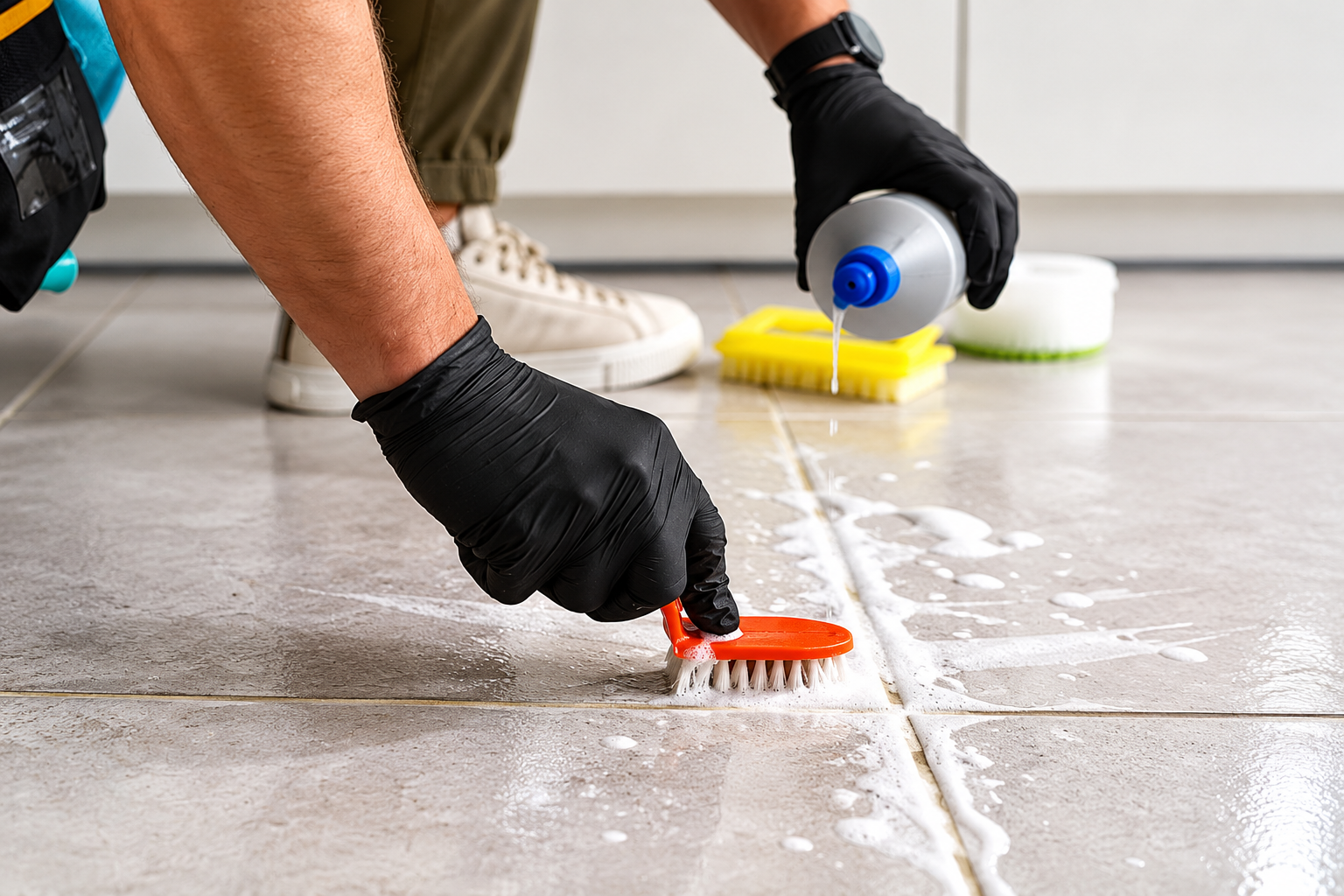
Tile and grout cleaning Gold Coast services can help when regular mopping no longer removes stubborn stains, discoloured grout or dirt embedded in tiled floors.
If your bathroom grout stays dark after scrubbing, kitchen tiles look dull or high-traffic areas never seem completely clean, the problem may go beyond everyday surface dirt. Sand, moisture, foot traffic and cleaning residue can gradually affect the appearance of tiled surfaces.
Some problems respond to regular maintenance. Others require professional cleaning equipment, while cracked grout or damaged tiles may need repairs rather than cleaning alone.
This guide explains seven signs your tiles and grout need professional attention, why floors become difficult to clean and when to consider booking a professional tile cleaner on the Gold Coast.
Why Tiles and Grout Become Dirty
Tiles and grout face daily exposure to dirt, moisture and foot traffic, particularly in kitchens, bathrooms, hallways and outdoor entertaining areas.
Although many tiles have relatively smooth surfaces, grout is often porous. It can absorb moisture, oils and dirt, causing grout lines to darken or develop uneven staining.
Several common conditions contribute to this buildup.
Regular Foot Traffic
Foot traffic carries dust, grit and other debris across tiled floors. Over time, these particles can settle into grout lines and textured surfaces.
Entryways, kitchens and shared residential corridors are particularly exposed to this type of dirt.
Where cleaning does not remove the accumulated grime, high-traffic areas may begin to look noticeably different from the rest of the floor.
Moisture and Humidity
Bathrooms, laundries and other wet areas are regularly exposed to moisture.
Poor ventilation, persistent dampness and soap residue can contribute to grout staining and microbial growth.
The Australian Building Codes Board explains that the National Construction Code 2022 includes a 10-minute exhaust fan run-on requirement for certain bathrooms without adequate natural ventilation. This highlights the importance of removing moisture from wet areas. Where bathroom grout repeatedly develops staining or mould, check whether ventilation is working effectively and investigate any persistent leaks or dampness.
Gold Coast properties may experience additional moisture exposure due to local climate conditions, making suitable ventilation and regular maintenance important.
Coastal Sand and Outdoor Debris
Properties near Gold Coast beaches, including Burleigh Heads, Broadbeach and Surfers Paradise, may experience sand and outdoor debris being carried indoors.
Sand and grit can settle along grout lines or become trapped in textured tiles. Dirt and salt deposits may also affect the appearance of some exterior tiled surfaces.
Regular sweeping or vacuuming helps remove abrasive debris before it is spread across the floor during mopping.
Ineffective Cleaning Methods
Routine mopping removes loose surface dirt but may leave grime embedded in textured tiles and grout lines.
Unsuitable cleaning products can also leave residue or affect certain tile finishes.
If repeated cleaning produces little improvement, the floor may need a different cleaning method rather than more aggressive scrubbing.
7 Signs You Need Professional Tile and Grout Cleaning
Not every stained tile or dark grout line requires professional attention. However, some problems become increasingly difficult to manage with ordinary household cleaning.
These seven warning signs can help you decide whether deeper cleaning or a professional assessment is appropriate.
1. Grout Lines Are Dark or Discoloured
Discoloured grout is one of the clearest signs that dirt has accumulated between tiles.
Light-coloured grout may gradually turn grey or brown, while darker grout can develop uneven patches or visible staining.
Before arranging treatment, check whether the discolouration improves with a suitable grout-cleaning product and gentle cleaning.
If the grout remains dark despite appropriate maintenance, embedded dirt may require professional attention.
Big Red Gold Coast provides professional grout cleaning to address accumulated dirt and improve the appearance of grout lines.
However, grout that is permanently stained or deteriorating may require restoration rather than cleaning alone.
2. Stubborn Stains Keep Returning
Spills, grease, tracked-in dirt and soap residue can leave persistent marks on tiled surfaces.
Some stains respond to routine cleaning, while others become harder to remove after repeated exposure or prolonged contact.
Signs that deeper cleaning may be needed include:
- Stains remaining after cleaning with tile-appropriate products.
- Greasy marks repeatedly appearing around kitchen floors.
- Dark patches developing along grout joints.
- Outdoor tiles remaining stained after routine washing.
A professional cleaner can assess the staining and determine which cleaning methods are suitable for the tile material.
Not every stain can be removed completely. Permanent discolouration or damaged finishes may require additional restoration work.
3. Floors Still Look Dull After Mopping
If your floors look cloudy, dull or uneven immediately after mopping, ordinary cleaning may not be removing accumulated grime.
This is particularly noticeable on textured tiles, where small surface grooves can trap dirt and residue.
Using too much cleaning product or failing to remove residues thoroughly may also affect the floor’s appearance.
Professional cleaning can help remove accumulated dirt where the surface condition allows.
However, scratches, worn finishes and damaged coatings cannot necessarily be corrected through cleaning.
4. Bathroom Tiles Have Persistent Soap Scum or Grime
Bathrooms are particularly vulnerable to buildup from soap residue, body oils, moisture and mineral deposits.
Shower floors and grout joints may become stained where water regularly remains on surfaces.
Warning signs include:
- Persistent soap residue around shower floors.
- Darkened grout along wall and floor joints.
- Stains around drainage areas.
- Deposits that resist suitable bathroom cleaning products.
Where the problem is accumulated dirt or residue, professional cleaning may improve the appearance of the tiles and grout.
If mould or persistent dampness is present, investigate the moisture source as well. Cleaning alone will not resolve leaking fixtures, inadequate ventilation or concealed moisture problems.
5. High-Traffic Areas Look Noticeably Different
Compare tiled areas near entrances, kitchens and frequently used walkways with less-used parts of the floor.
If the grout in busy sections is noticeably darker, accumulated dirt may be affecting the overall appearance.
This can be particularly relevant in rental properties, shared residential spaces and commercial premises that experience regular foot traffic.
Professional cleaning can help address differences caused by removable dirt and residue.
Permanent wear, surface damage and deteriorated finishes may require separate attention.
6. Grout or Tiles Show Signs of Deterioration
Cracked grout, loose tiles, chipped edges and damaged joints are signs that the floor may need more than cleaning.
Damaged areas can allow moisture and dirt to enter spaces that are difficult to maintain.
Before arranging intensive cleaning, have the condition of the affected area assessed.
Cleaning may still be suitable for surrounding surfaces, but loose tiles, missing grout and damaged finishes could require repair.
Big Red Gold Coast lists minor tile repairs and restoration among its tile cleaning services.
The appropriate work depends on the condition of the flooring and the extent of the damage.
7. Routine Cleaning Takes Longer Without Improving Results
Repeatedly scrubbing grout with little improvement is a sign that your current cleaning approach may no longer be effective.
More pressure or stronger chemicals are not always the answer. Abrasive tools and unsuitable products can damage certain grout and tile finishes.
If you are spending more time cleaning but the floor still looks stained or dull, a professional assessment can help identify whether the problem involves:
- Dirt embedded in textured surfaces.
- Accumulated residue.
- Persistent staining.
- Deteriorated grout.
- Worn or damaged tile finishes.
Understanding the cause helps determine whether cleaning, restoration or repair is the most suitable next step.
When Should You Book Professional Tile and Grout Cleaning?
The condition of your tiles and grout is generally a better guide than following a fixed cleaning schedule.
Light surface dirt may respond to ordinary maintenance, while embedded grime, recurring staining or damaged grout calls for a closer look.
Use the following table to decide what action may be appropriate.
| Floor condition | Recommended first step | When professional help may be needed |
| Light surface dust and dirt | Regular sweeping and mopping | Usually unnecessary |
| Slight grout discolouration | Use a suitable grout-cleaning product | If discolouration persists |
| Stubborn stains | Identify the stain and use tile-compatible products | When appropriate cleaning does not work |
| Heavy grime in textured tiles | Clean thoroughly using suitable methods | If embedded dirt remains |
| Repeated bathroom staining | Improve ventilation and address moisture | If buildup continues |
| Cracked grout or damaged tiles | Arrange a condition assessment | Before intensive cleaning or restoration |
| Large shared or high-traffic floors | Establish a suitable maintenance routine | When routine cleaning becomes insufficient |
Professional cleaning may be worth considering when repeated maintenance produces little improvement or when cleaning large areas becomes difficult to manage.
If the grout is cracked, tiles are loose or the surface appears damaged, arrange an assessment before intensive cleaning begins.
How Does Professional Tile and Grout Cleaning Work?
Professional tile and grout cleaning goes beyond routine mopping by using suitable cleaning solutions and specialised equipment to address accumulated dirt.
The treatment method depends on the material, surface condition and nature of the buildup.
Big Red Gold Coast describes using specialised industrial equipment, cleaning solutions and truck-mounted cleaning systems for its tile and grout cleaning services.
A professional service may involve five stages.
1. Inspecting the Tiles and Grout
The technician examines the flooring for visible dirt, staining, damaged grout and surface defects.
Different materials, including ceramic, porcelain and natural stone, may require different approaches.
An initial assessment helps determine whether the surface is suitable for cleaning and whether repairs should be considered first.
2. Selecting Suitable Cleaning Products
Cleaning solutions are selected according to the tile material, grout condition and type of buildup.
This matters because products suitable for one surface may damage another, particularly some natural stone finishes.
The aim is to remove accumulated dirt without using inappropriate chemicals or methods.
3. Treating Embedded Dirt and Grime
Suitable cleaning solutions and equipment are used to loosen dirt from tile surfaces and grout lines.
Professional equipment can help address buildup that ordinary mopping and household tools struggle to remove.
The cleaning method should match the material and its condition.
4. Removing Loosened Contaminants
Where appropriate, extraction equipment removes cleaning solution and suspended dirt from the treated surface.
This helps reduce the residue left behind after cleaning.
The exact extraction process depends on the equipment and treatment method used.
5. Assessing the Finished Surface
After cleaning, the technician can identify any remaining stains, damaged grout or surface defects.
Where problems cannot be resolved through cleaning alone, additional work such as sealing, restoration or minor repairs may be discussed.
These are separate considerations and should be assessed according to the flooring’s condition.
What Professional Tile Cleaning Can Do That Mopping Cannot
Routine household cleaning and professional tile cleaning serve different purposes.
Sweeping and mopping help remove everyday dust, spills and loose dirt. They remain important even when a property receives periodic professional cleaning.
However, household tools may struggle to reach grime embedded in porous grout or textured tile surfaces.
Professional cleaning offers three practical advantages.
Specialised equipment: Professional cleaning systems can help loosen and remove accumulated dirt that ordinary mopping leaves behind.
Surface assessment: A technician can assess tile materials, visible defects and cleaning suitability before selecting a method.
Targeted cleaning: Difficult grout staining, textured surfaces and heavily used areas can be assessed and treated according to their condition.
Professional cleaning is not a substitute for repairs. It cannot reliably reverse permanent staining, cracked grout, worn finishes or damaged tiles.
For ongoing care, regular sweeping, suitable mopping and prompt spill removal remain essential.
Why Gold Coast Properties May Need Additional Tile Maintenance
The cleaning needs of Gold Coast properties vary depending on their location, flooring materials and how the spaces are used.
Coastal debris, moisture and regular foot traffic can all affect how quickly tiles and grout become dirty.
Coastal Homes and Apartments
Beachside properties may experience sand, grit and salt deposits being carried into indoor and outdoor tiled areas.
Removing abrasive debris regularly can help limit unnecessary wear and reduce buildup in grout lines.
For properties in Burleigh Heads, Big Red Gold Coast provides dedicated tile and grout cleaning services in Burleigh Heads, including services for coastal homes and outdoor tiled areas.
Rental Properties and Holiday Accommodation
Rental properties and holiday accommodation can experience changing levels of foot traffic, particularly during tenant transitions and busy periods.
Bathrooms, kitchens, entrances and living areas may need closer attention between occupancies.
Where routine maintenance no longer achieves the required presentation standard, professional tile and grout cleaning may be worth considering.
The decision should reflect the floor’s actual condition rather than an assumed cleaning frequency.
Strata-Managed Properties
Shared residential buildings often contain tiled spaces that receive frequent use.
Examples include entrance foyers, corridors, communal facilities and shared amenities.
For strata managers, planned cleaning can help maintain a consistent appearance across common areas.
Regular inspections can also help identify grout deterioration, loose tiles and other conditions that may require repairs rather than deeper cleaning.
Tile Cleaning or Restoration: Which Do You Need?
Not every flooring problem can be resolved through cleaning.
The key distinction is whether the issue involves removable dirt or damage to the grout, tile or surface finish.
Professional cleaning may be suitable for:
- Dirt embedded in grout lines.
- Surface grime and grease buildup.
- Removable stains.
- Soap residue and accumulated deposits.
Restoration or repair may be needed for:
- Cracked or missing grout.
- Loose or chipped tiles.
- Worn surface finishes.
- Deteriorated sealing.
- Permanent staining or surface damage.
Cleaning can improve the appearance of suitable surfaces, but it cannot reverse every type of wear.
If you are unsure whether the problem is staining or deterioration, a professional assessment can help clarify the available options.
Big Red Gold Coast lists tile restoration and minor repair services alongside professional cleaning.
How to Keep Tiles and Grout Cleaner Between Professional Services
Consistent maintenance can reduce the rate at which dirt accumulates and help preserve the appearance of tiled floors.
- Sweep or vacuum regularly. Remove sand, dust and loose grit before mopping.
- Use suitable cleaning products. Follow the manufacturer’s recommendations for the tile and grout materials.
- Clean spills promptly. Avoid leaving oils, coloured liquids and other substances on porous grout.
- Manage bathroom moisture. Improve ventilation and address leaking fixtures.
- Avoid aggressive scrubbing. Abrasive tools can damage certain finishes and grout joints.
- Use entrance mats. Reduce the amount of outdoor debris carried onto tiled floors.
- Inspect grout periodically. Check for cracking, missing sections and persistent dampness.
For natural stone flooring, avoid acidic cleaning products unless they are specifically approved for the material.
Never mix cleaning chemicals, particularly bleach with acidic or ammonia-based products.
If cleaning becomes increasingly difficult despite appropriate maintenance, assess whether the issue is embedded dirt or deterioration rather than repeatedly using stronger products.
Frequently Asked Questions About Tile and Grout Cleaning
How Often Should Tile and Grout Be Professionally Cleaned?
There is no universal cleaning schedule for every property.
The appropriate frequency depends on foot traffic, tile material, moisture exposure and the amount of accumulated dirt.
High-use areas may need more frequent attention. A technician can recommend a suitable schedule after assessing the flooring.
Can Professional Cleaning Restore the Original Grout Colour?
Professional cleaning can remove accumulated dirt that has changed the appearance of grout.
However, permanent staining, discolouration or deteriorated grout may require restoration or other work.
Results depend on the grout’s condition and the cause of the discolouration.
Is Professional Tile Cleaning Suitable for All Tile Types?
Many tile materials can be professionally cleaned, including ceramic, porcelain and certain natural stones.
However, the products and equipment must be compatible with the material and surface finish.
Sensitive or damaged surfaces may require a different approach.
Can Professional Cleaning Remove Mould From Grout?
Cleaning may remove some surface growth and associated staining.
However, persistent mould can indicate an underlying moisture problem.
Leaking fixtures, damaged grout, failed waterproofing or concealed dampness may need separate investigation.
Is Grout Sealing Necessary After Cleaning?
Sealing may be beneficial for certain grout types and surfaces, but it is not necessary or suitable in every situation.
The decision depends on the grout material, previous treatments and manufacturer’s recommendations.
Ask whether sealing is appropriate for your flooring before arranging additional work.
Can I Arrange Carpet and Tile Cleaning Together?
For properties with several flooring types, coordinating different cleaning services may simplify maintenance planning.
Big Red Gold Coast lists both carpet and tile cleaning in its cleaning and restoration service directory.
Contact the team to confirm whether both services can be scheduled together for your property.
Book Professional Tile and Grout Cleaning on the Gold Coast
If your grout remains discoloured after scrubbing, tiles look dull despite regular mopping or stains continue to return, it may be time to consider professional cleaning.
Repeatedly using stronger products or spending more time scrubbing may not resolve embedded grime, and unsuitable cleaning methods can damage certain surfaces.
A professional assessment can help determine whether the problem involves removable dirt, persistent staining or flooring that requires repair.
Big Red Gold Coast provides tile and grout cleaning services for residential and commercial properties across the Gold Coast and Brisbane Southside.
Whether you are maintaining your home, preparing a rental property or managing shared flooring, contact the team to discuss the condition of your tiles and the cleaning options available.
Request a Tile and Grout Cleaning Quote from Big Red Gold Coast
You can also explore the full range of Big Red cleaning and restoration services before making an enquiry.